The Consultant Exodus: What Happens When Biotech's Senior Scientists Stop Showing Up to Work
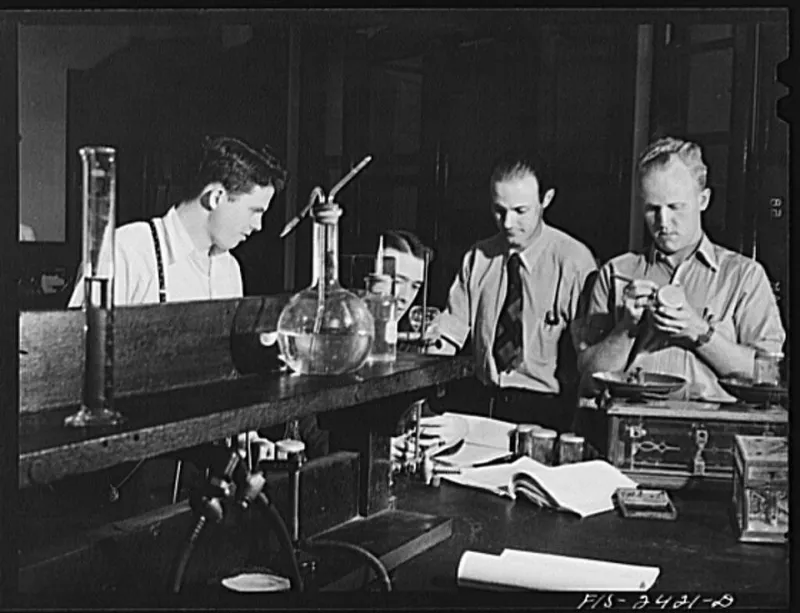
Photo: Unknown authorUnknown author, Public domain, via Wikimedia Commons
A New Kind of Brain Drain
The phrase "brain drain" in American biotech has long conjured a familiar image: a promising young researcher accepting a software engineering role at a Bay Area tech firm, or a freshly minted PhD choosing a hedge fund over a laboratory bench. But a subtler and arguably more disruptive form of talent migration is now underway — one that doesn't involve scientists leaving the industry at all, at least not entirely.
Increasingly, the researchers most capable of anchoring a program, mentoring junior scientists, and carrying institutional memory across a drug development cycle are choosing to work for biotech companies rather than within them. The distinction matters enormously. Independent scientific consultants retain their expertise, their networks, and their reputations — but they do not retain their loyalty to any single organization's long-term trajectory. And for an industry that depends on continuity, that difference is beginning to show.
The Economics of Independence
To understand why experienced scientists are gravitating toward consulting arrangements, it helps to examine what traditional biotech employment has come to offer — and withhold — at the senior level.
For researchers with fifteen or twenty years of specialized experience, staff positions frequently carry compensation structures that lag behind the value those individuals generate. Equity can be diluted, bonuses are tied to milestones that may shift with funding cycles, and the volatility of the biotech sector means that even well-compensated positions can evaporate following a failed Phase II trial or a strategic pivot. The calculation is not irrational: a principal scientist who consults across four or five companies simultaneously can generate substantially higher income, maintain schedule autonomy, and insulate themselves from the single-point risk of any one employer's fortunes.
The pandemic accelerated this calculus considerably. Remote work normalized the logistics of distributed engagement, and many researchers who had been furloughed or laid off during the sector's contraction cycles between 2021 and 2023 discovered that rebuilding their professional lives through consulting was not only viable but preferable. Having experienced institutional vulnerability firsthand, a significant cohort of senior scientists has elected not to return to the traditional employment arrangement.
What Gets Lost in the Translation
The operational consequences of this shift are not immediately visible on a balance sheet, which is part of what makes them so dangerous.
Institutional knowledge — the accumulated understanding of why a particular assay protocol was modified three years ago, how a formulation challenge was navigated before the current team arrived, what a former regulatory reviewer flagged during a pre-IND meeting — does not transfer cleanly through consulting engagements. A consultant who works with an organization for six months and then rotates to a new client takes that contextual knowledge with them, or simply allows it to dissipate. The junior scientists left behind inherit a gap they may not even recognize as a gap.
Collaborative research compounds the problem. Drug discovery at the frontier increasingly requires sustained, iterative dialogue between disciplines — between computational biologists and medicinal chemists, between pharmacologists and translational scientists. That kind of dialogue is built on trust, familiarity, and shared history. Consulting relationships, however productive in isolation, are structurally ill-suited to generating the deep interdisciplinary cohesion that characterizes the most productive research teams. When a critical node in that network is occupied by someone whose primary allegiance is to their own practice rather than to a shared scientific mission, collaboration becomes transactional rather than generative.
The Case for the Distributed Model
Not everyone in the industry views this trend with alarm. A growing number of biotechs — particularly lean, venture-backed organizations operating at the discovery stage — have built their scientific strategies explicitly around a consulting-heavy model, engaging recognized experts on a project basis rather than carrying the overhead of a large permanent staff.
For these companies, the arrangement offers genuine advantages. Access to world-class expertise that would be financially inaccessible on a full-time basis, the ability to bring in precisely calibrated knowledge for a specific program phase, and the flexibility to scale scientific capacity up or down without the human costs of hiring and severance cycles — these are real operational benefits, not merely rationalizations.
There is also an argument that the consultant economy, at its best, functions as a form of distributed innovation infrastructure. Senior scientists who work across multiple organizations simultaneously carry pattern recognition that staff scientists cannot develop from within a single institutional context. They identify analogous problems across programs, transfer methodological innovations between research environments, and effectively serve as nodes in an informal knowledge network that spans the industry.
The question is whether that network can substitute for the deeper continuity that long-term institutional commitment provides — and the evidence suggests it cannot do so entirely.
What Biotech Organizations Must Reckon With
If the consultant exodus reflects a structural failure in how biotech employs its most experienced scientists, then the corrective response requires more than incremental compensation adjustments. It requires a fundamental reexamination of what senior scientific employment is designed to offer.
Retention of high-caliber researchers at the staff level depends on creating conditions in which those researchers experience genuine intellectual ownership of their work, meaningful influence over research direction, and a reasonable degree of protection from the volatility that has historically made biotech careers feel precarious. Companies that have invested in creating scientific advisory structures that give experienced staff researchers visibility and voice — rather than reserving those mechanisms exclusively for external consultants — report stronger retention at the senior level.
There is also a mentorship dimension that the industry cannot afford to ignore. When the most experienced scientists are engaged on a transactional basis, the informal mentorship infrastructure that has historically transmitted scientific judgment from one generation to the next is quietly dismantled. The junior and mid-level researchers who remain as permanent staff are left without the sustained guidance that shapes scientific maturity. The cost of that loss will not appear in a quarterly report, but it will appear — in the quality of decisions made, in the errors that experience would have prevented, in the programs that stall because no one on the team has navigated that particular obstacle before.
An Industry at an Inflection Point
The rise of the scientific consultant class is neither entirely a problem nor entirely a solution. It is, more precisely, a signal — one that reflects genuine tensions in how American biotech structures the relationship between scientific expertise and institutional commitment.
Organizations that treat the trend as an external market force, rather than as a response to internal conditions they have the power to change, will find themselves increasingly dependent on talent that is, by design, never fully theirs. Those that engage seriously with the structural question — why are our best scientists choosing not to belong to us? — may find that the answer points toward changes that benefit not only retention, but the quality and continuity of the science itself.
At Lenitiv Labs, we believe the strength of research programs is inseparable from the stability and depth of the teams conducting them. The consultant economy is here, and it carries real value. But it is not a substitute for building organizations where the most capable scientists want to stay.