The Exodus Effect: How American Biotech Is Losing Its Next Generation of Scientists to Finance and Tech—and What Must Change
Photo: Ministry of Science and Technology, GODL-India, via Wikimedia Commons
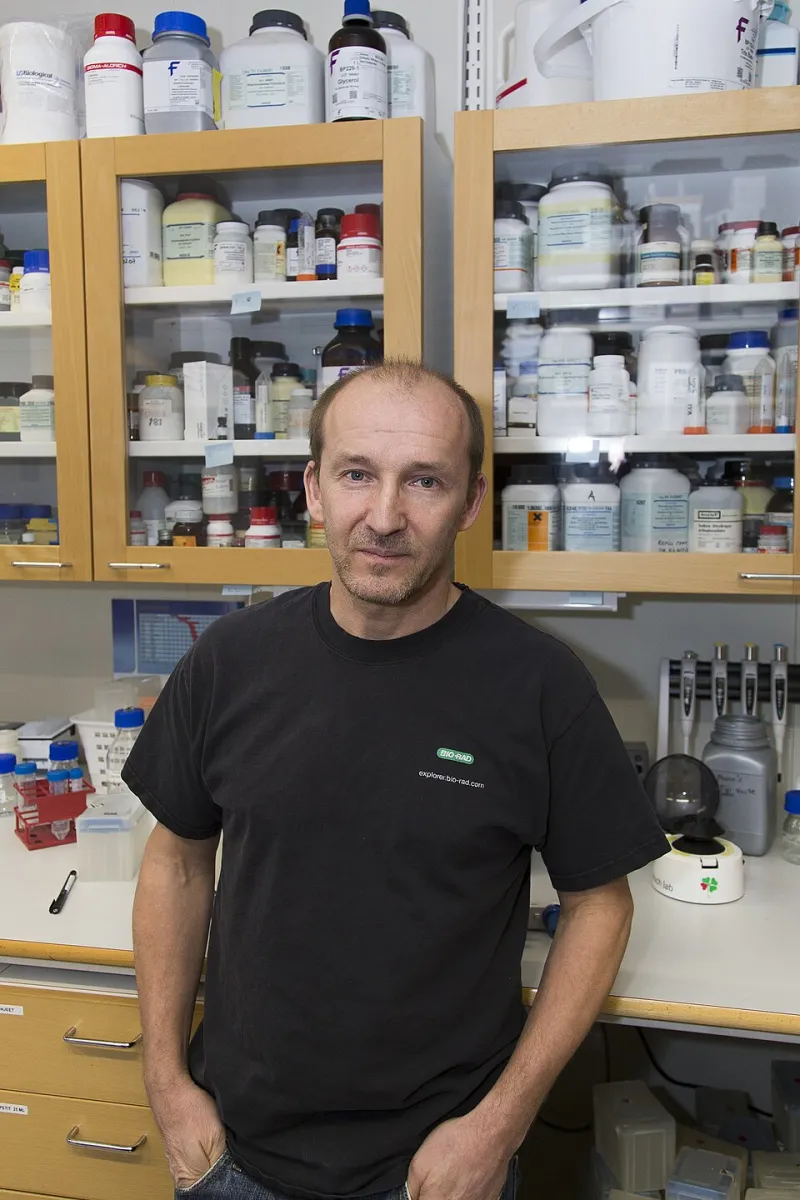
There is a particular kind of institutional self-deception that has persisted in American biotech for decades: the belief that the prestige of scientific work is itself sufficient compensation. For a generation of postdoctoral researchers, that assumption has worn thin. Faced with median stipends that have barely kept pace with inflation, career timelines measured in years of uncertainty, and compensation packages that compare unfavorably to entry-level positions in finance or technology, a significant and growing share of the country's most rigorously trained scientists are quietly making a different choice.
They are not failing. They are leaving—and they are not coming back.
The downstream consequences of this exodus are not merely sentimental. Postdoctoral researchers form the connective tissue of biotech's innovation pipeline. They execute the experiments that generate preliminary data. They mentor graduate students. They carry institutional knowledge across research programs. When they depart in large numbers for Wall Street trading desks or Silicon Valley product teams, the research velocity of the institutions they leave behind slows in ways that are difficult to quantify but impossible to ignore.
The Structural Roots of the Problem
To understand why postdoctoral attrition has reached crisis proportions, it is necessary to understand the economic architecture of American academic research—and the ways in which that architecture has failed to evolve alongside the broader labor market.
The postdoctoral model was designed for a different era. In its original conception, a postdoc was a transitional position: a two-to-three-year apprenticeship that prepared a scientist for an independent faculty role or a senior industry position. That model assumed a labor market in which such roles were reasonably plentiful. It no longer is.
The number of PhD scientists produced by American universities has grown substantially over the past three decades. The number of tenure-track faculty positions has not grown commensurately. The result is a system in which postdoctoral researchers routinely spend five, six, or seven years in successive temporary positions before either securing a permanent role or concluding that one is unlikely to materialize. During those years, they earn salaries that the NIH's own minimum stipend guidelines—currently set at approximately $56,000 annually for first-year postdocs—establish as the floor, not the ceiling. In high cost-of-living research hubs like Boston, San Francisco, and San Diego, that figure represents genuine financial hardship for scientists in their late twenties and thirties who may be managing student debt, family obligations, or both.
The contrast with alternative career paths is stark. A postdoctoral researcher with a PhD in molecular biology, computational biology, or a related quantitative discipline can, upon leaving the bench, command a starting salary at a quantitative finance firm or a technology company that is often double or triple their current stipend—with equity compensation, retirement matching, and professional development support that academic institutions rarely offer.
What the Data Reveals
Survey data from the National Postdoctoral Association and independent academic studies paint a consistent picture. Compensation dissatisfaction consistently ranks among the top reasons postdoctoral researchers cite for considering career transitions out of research. But the problem is not purely financial. Career trajectory uncertainty—the inability to project with any confidence where a postdoctoral position leads or how long the path to independence will take—ranks equally high as a driver of departure.
There is also a demographic dimension that warrants attention. Women and researchers from underrepresented backgrounds leave the postdoctoral pipeline at disproportionately high rates, a pattern that compounds existing equity gaps in scientific leadership and narrows the diversity of perspectives contributing to American biotech innovation.
The COVID-19 pandemic accelerated several of these trends. Remote work normalization made it demonstrably easier for scientists to transition into technology roles that had previously required geographic relocation. The visibility of lucrative data science and machine learning positions—many of which actively recruited scientists with advanced quantitative training—introduced options that an earlier generation of researchers had not encountered so readily.
The Cost to Research Velocity
Laboratory directors and research institution administrators are beginning to speak more openly about what this attrition costs in practical terms. A postdoctoral researcher who departs after two years takes with them not only their scientific skills but the accumulated experimental knowledge, troubleshooting experience, and protocol refinement that cannot be easily documented or transferred. Recruiting and onboarding a replacement typically requires six to twelve months before the new researcher reaches comparable productivity—a delay that compounds across research programs and institutions.
For biotech companies that rely on academic research partnerships to seed their early-stage pipelines, the degradation of postdoctoral talent pools creates a less visible but equally significant problem. The quality and volume of translatable science emerging from academic laboratories is, in part, a function of the experience and stability of the researchers conducting it. When that population is in constant flux, the reliability of the science suffers accordingly.
What Forward-Thinking Institutions Are Doing
A number of research institutions and biotech companies have begun implementing structural changes that go beyond incremental stipend increases.
Several leading research universities have established formal postdoctoral career development programs that provide explicit training in industry transition, entrepreneurship, and scientific communication—skills that the traditional apprenticeship model does not cultivate. The goal is not to accelerate departure from research but to make postdoctoral positions feel like genuine career investments rather than holding patterns.
On the compensation front, a small but growing number of institutions have begun supplementing NIH stipend floors with institutional top-ups, housing assistance programs, and student loan repayment support. These measures are not uniformly available, and their implementation has been uneven, but they represent an acknowledgment that the stipend model alone is no longer viable in competitive labor markets.
Biotech companies, for their part, have begun engaging with the postdoctoral community earlier and more deliberately. Structured fellowship programs that embed postdoctoral researchers in industry settings—while preserving their academic affiliations—have proven effective at both retaining talent in the scientific ecosystem and building industry familiarity that accelerates career transitions when they do occur.
A Call for Systemic Recalibration
Individual institutional responses, however well-designed, are insufficient to address a problem of this scale. The postdoctoral talent crisis is a systemic failure that requires a systemic response.
Funding agencies, including the NIH, NSF, and their private foundation counterparts, should revisit the stipend and benefit structures attached to the grants that support postdoctoral positions. The gap between what those structures provide and what competing sectors offer has grown too wide to be addressed by institutional goodwill alone.
Research institutions must also confront the uncomfortable reality that they have, in many cases, treated postdoctoral researchers as low-cost labor rather than as early-career professionals whose development warrants genuine institutional investment. Changing that dynamic requires not only policy adjustments but a cultural shift in how scientific leadership values and engages with the researchers who sustain their programs.
American biotech's capacity for innovation rests, ultimately, on the depth and quality of its human capital. The scientists who might have made the discoveries that define the next decade of therapeutic development are, right now, making decisions about whether to stay at the bench or pursue more rewarding opportunities elsewhere. The institutions that take that reality seriously—and act on it with urgency—will find themselves better positioned to lead. Those that do not will find the cost of inaction compounding in ways that no amount of capital or technology can fully compensate for.