Losing the Lab: What Happens When Biotech's Brightest Minds Choose Silicon Valley Over the Bench
For years, a career in biotech research was the aspirational endpoint for America's most rigorous scientific minds. The promise was clear: apply your training to diseases that devastate lives, work alongside world-class colleagues, and contribute to discoveries that outlast any quarterly earnings report. That promise has not disappeared. But it is competing — and in many cases losing — against a new generation of high-growth sectors that are recruiting from the same talent pool with formidable resources and a compelling pitch of their own.
The numbers tell a sobering story. A 2023 analysis by the Brookings Institution found that employment growth in AI-related research roles outpaced traditional life sciences positions by a factor of three over the preceding five years. Meanwhile, climate technology — encompassing everything from carbon capture to next-generation battery chemistry — has attracted billions in federal and private investment, creating thousands of well-compensated research positions that simply did not exist a decade ago. For biotech human resources teams, these are not abstract market trends. They are the forces pulling postdoctoral researchers and mid-career scientists out of their labs and into a different kind of future.
The Compensation Gap Nobody Wants to Talk About
Dr. Priya Mehta spent seven years as a computational biologist at a mid-sized oncology-focused biotech firm in the Research Triangle. She was, by every internal measure, exceptional — leading a team that developed novel target identification pipelines and co-authoring papers that drew citations from across the field. In early 2023, she accepted a position as a senior machine learning researcher at a Bay Area AI company, with a total compensation package that exceeded her previous salary by nearly 60 percent.
"It wasn't an easy decision," she says. "I genuinely cared about the work. But when you're in your mid-thirties and someone offers you that kind of financial security, along with equity that might actually vest into something meaningful, you have to take it seriously."
Her experience is not unusual. Across the industry, a structural compensation asymmetry has emerged between biotech research roles and their counterparts in AI and deep tech. Base salaries at large technology firms and well-funded AI startups frequently exceed biotech equivalents by 30 to 50 percent, and the equity upside — particularly at companies with shorter paths to liquidity — can be transformative in a way that biotech stock options rarely are, given the decade-long timelines that characterize drug development.
Biotech executives are aware of the disparity, and many are candid about the difficulty of closing it. "We can't match a hyperscaler's cash compensation," acknowledges one Chief Scientific Officer at a Boston-area gene therapy company, who asked not to be identified. "What we try to sell is mission. The problem is that mission only carries so much weight when someone has a mortgage and student loans."
Career Velocity and the Patience Problem
Beyond compensation, researchers who have made the transition frequently cite career trajectory as a decisive factor. In traditional biotech, advancement is measured in the tempo of the drug development cycle — a rhythm defined by clinical trial phases, regulatory submissions, and the grinding patience required to move a molecule from discovery to approval. That timeline, averaging 10 to 15 years from target identification to market, demands a particular psychological disposition. Not every talented scientist possesses it.
In AI and climate tech, by contrast, the feedback loop is compressed. Researchers ship models, test hypotheses in near real-time, and see the consequences of their decisions within weeks rather than years. For scientists trained in a culture that rewards intellectual velocity, this difference is not trivial.
Dr. Marcus Webb, who transitioned from a protein engineering role at a San Diego biotech to a climate technology firm developing novel electrocatalysts, frames it this way: "In biotech, you could spend three years on a target that gets deprioritized in a portfolio review. That's not anyone's fault — it's the nature of the work. But in my current role, I can run fifty experiments in the time it used to take me to get a committee to approve one."
What Retention Actually Requires
The biotech firms navigating this landscape most effectively are those that have moved beyond salary benchmarking exercises and begun rethinking the structural conditions of scientific work itself.
Some companies have introduced internal innovation programs that allow researchers to dedicate a portion of their time to exploratory projects outside their primary responsibilities — a model borrowed, deliberately, from the technology sector. Others have restructured equity programs to include more frequent vesting milestones, reducing the all-or-nothing character of traditional biotech options. A handful of firms have begun partnering with universities and national laboratories to offer researchers a more varied intellectual environment, acknowledging that isolation within a single therapeutic focus can erode engagement over time.
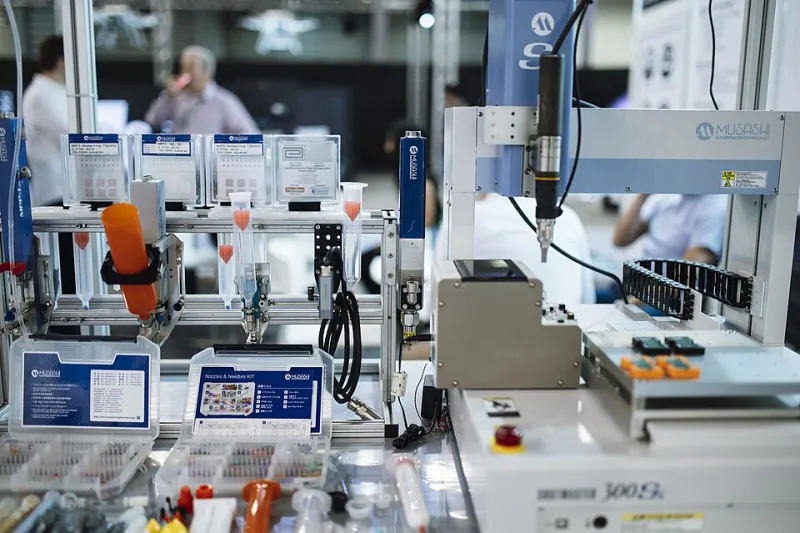
Perhaps most importantly, the companies retaining talent at higher rates are those investing seriously in research infrastructure — modern computational platforms, automated experimentation systems, and data environments that allow scientists to operate at the pace their curiosity demands. Scientists do not leave only for money. They also leave because they are frustrated. Removing the friction that accumulates in under-resourced labs may be the most underappreciated retention strategy available.
The Stakes for American Biotech
The consequences of this talent shift extend well beyond individual companies. The United States has built its global leadership in biopharmaceutical innovation on a foundation of scientific talent that is now being competed for more aggressively than at any point in recent history. If the researchers best positioned to develop next-generation therapeutics are systematically redirected toward other sectors, the downstream effects on drug pipelines, on patient outcomes, and on America's standing in the global life sciences economy will be felt for decades.
This is not an argument against AI or climate technology. Both fields address problems of genuine urgency, and the migration of scientific talent across disciplinary boundaries has historically produced valuable cross-pollination. But biotech leadership cannot afford to treat the talent exodus as an inevitable feature of a competitive market. It is a solvable problem — one that requires honest diagnosis, structural investment, and the willingness to build scientific careers that are genuinely competitive with the alternatives now available.
The bench is still calling. The question is whether the industry is listening closely enough to hear what scientists are asking for in return.