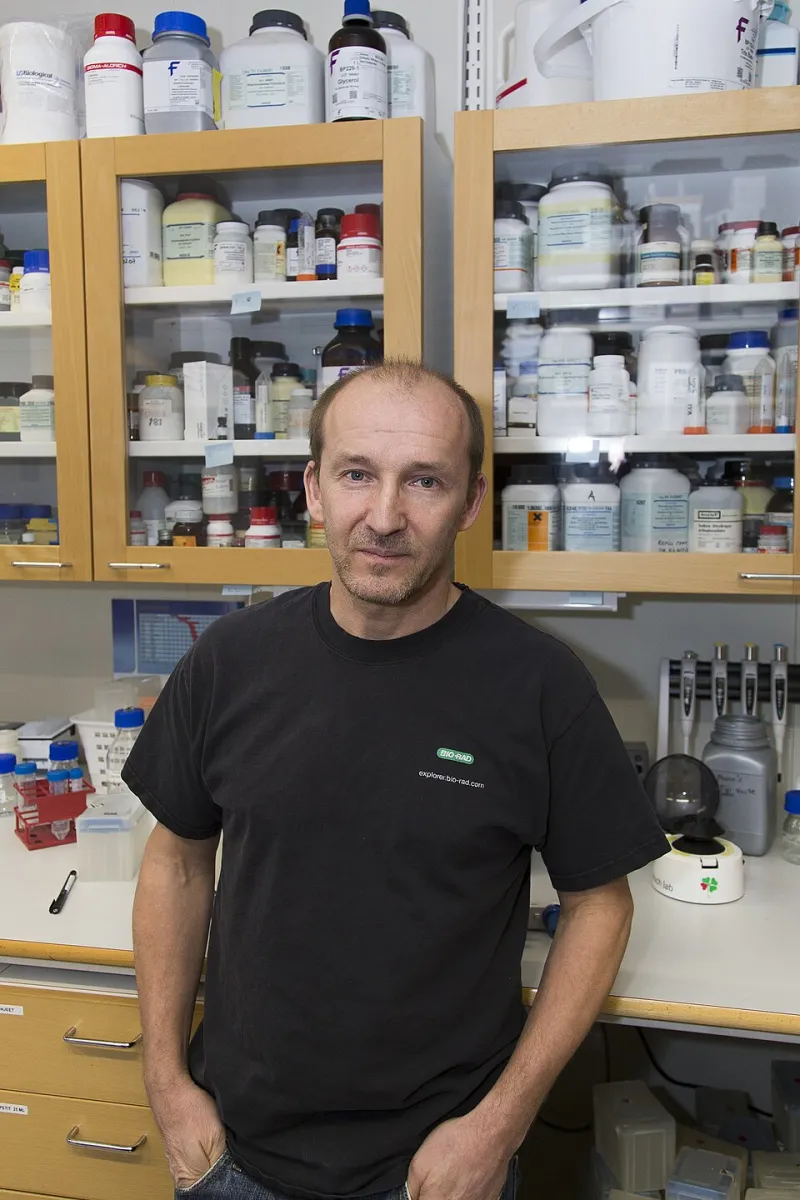
The Scientist Who Couldn't Sell: Why Technical Brilliance Alone Is Not Enough to Build a Biotech Company

Photo: Driyer5862, CC BY-SA 4.0, via Wikimedia Commons
There is a particular kind of tragedy that plays out regularly in American research institutions. A scientist spends a decade perfecting a mechanism of action, publishes findings that generate genuine excitement in the field, files a patent, and then — nothing. The compound sits in a university technology transfer office. The platform gathers dust. The researcher returns to the bench, convinced that the market simply was not ready, when the more uncomfortable truth is that they were not ready for the market.
This is not a story about scientific failure. It is a story about a systemic gap in how the United States trains its most capable researchers — one that costs the biotech industry in delayed therapies, missed commercial opportunities, and a persistent underutilization of the scientific talent it has spent billions of dollars developing.
The diagnosis is straightforward, even if the remedy is not: brilliant scientists are routinely underprepared for the non-scientific demands of building a company. And in a field where the distance between a laboratory discovery and a commercially viable product is measured in years, capital, regulatory complexity, and organizational execution, that gap is consequential.
The Competency Chasm
Ask most PhD-trained researchers what they were taught about investor relations, go-to-market strategy, or organizational design, and the answer is almost uniformly the same: nothing. Graduate programs in the life sciences are structured to produce rigorous experimentalists, not commercially oriented founders. That is an entirely defensible pedagogical choice — but it creates a predictable blind spot at precisely the moment when scientific promise is most likely to be converted into real-world impact.
The competencies that matter most in the transition from researcher to founder are not glamorous. They include financial modeling, term sheet literacy, narrative construction for non-scientific audiences, talent recruitment, and the management of stakeholder relationships that have little tolerance for the iterative ambiguity that defines good science. These are learnable skills. They are simply not being taught in the environments where the underlying science is being created.
The consequences are visible at every stage of the commercialization pipeline. Early-stage companies founded by scientists without business co-founders frequently struggle to articulate their value proposition in terms that resonate with investors who are evaluating dozens of competing opportunities. Technology transfer negotiations stall because researchers do not understand how licensing economics work. Clinical programs are designed with scientific elegance but without regard for the regulatory strategy that will ultimately determine whether a compound reaches approval.
Profiles in Translation
The scientists who have successfully bridged this divide share a common characteristic: at some point, they made a deliberate decision to become students of commercialization with the same intensity they had once applied to their scientific training.
Flagship Pioneering's Noubar Afeyan — whose platform company model incubated Moderna — has spoken extensively about the importance of what he calls "entrepreneurial science": the practice of asking not only whether something is scientifically possible, but whether it can be made into something durable and scalable. That orientation does not diminish scientific rigor. It contextualizes it.
Similarly, Anne Wojcicki's trajectory from Wall Street healthcare analyst to co-founder of 23andMe illustrates how fluency in both the scientific and commercial dimensions of a problem creates optionality that neither skill set alone provides. The companies that have most effectively compressed the bench-to-market timeline are almost universally led by individuals or founding teams that possess genuine competence in both domains.
For researchers who did not come up through those environments, the path is harder — but it is not closed. Several US institutions have begun building structured programming designed to address the gap directly. The Harvard-MIT Program in Health Sciences and Technology, the UCSF Entrepreneurship Center, and the NIH's I-Corps program for life sciences researchers all represent serious attempts to equip scientists with the commercial vocabulary and strategic frameworks that graduate training does not provide.
The Non-Scientific Skills That Actually Matter
For researchers who are serious about translating their work into viable products or companies, the priority competencies are more specific than "business skills" — a phrase broad enough to be almost meaningless.
Investor communication. The ability to explain scientific complexity to a sophisticated non-expert audience — without condescension and without sacrificing accuracy — is among the most valuable capabilities a scientist-entrepreneur can develop. Venture investors are not scientists, but they are not naive. They respond to clarity, intellectual honesty about risk, and a demonstrated understanding of what the company does not yet know.
Regulatory strategy. Drug development does not end with a promising Phase II result. Understanding how the FDA thinks about approval pathways, what constitutes a clinically meaningful endpoint, and how to design a program that is both scientifically sound and regulatorily navigable is not optional knowledge for a founder. It is foundational.
Capital allocation discipline. Early-stage biotech companies operate under conditions of radical resource constraint. The instinct of a trained scientist is to pursue the most rigorous possible experimental design; the imperative of a capital-efficient company is to generate the data that answers the next critical question with the fewest dollars. Learning to make that tradeoff deliberately — rather than defaulting to scientific completionism — is a genuine skill.
Team construction. Science is often a solitary or small-team endeavor. Building a company requires assembling a diverse organization with capabilities that the founders do not personally possess. Researchers who have never hired, managed, or let go of employees frequently underestimate how much organizational execution determines commercial outcomes.
Reframing the Researcher's Role
None of this is an argument for scientists to become businesspeople. The field needs researchers who are deeply committed to the integrity and rigor of their scientific work. What it does not need is researchers who treat commercial translation as someone else's problem — a task to be delegated to a technology transfer office or a business development executive while they return to the bench.
The most effective scientist-entrepreneurs are not those who abandoned their scientific identity. They are those who expanded it — who came to understand that the same intellectual discipline required to design a reproducible experiment is equally applicable to building a financial model, stress-testing a market hypothesis, or constructing a regulatory strategy.
For the next generation of researchers navigating the path from publication to impact, the message is direct: the science is necessary but not sufficient. The discovery is the beginning of the work, not the end of it. Institutions that train scientists to understand this — and equip them with the frameworks to act on it — are not diluting scientific culture. They are completing it.
The therapies that will define the next decade of American medicine are sitting in laboratories right now. Whether they reach patients depends not only on the quality of the science, but on the commercial fluency of the people who created it. That is a variable the biotech industry can — and must — choose to address.