Silent Downtime: The Equipment Crisis Quietly Costing American Biotech Its Competitive Edge
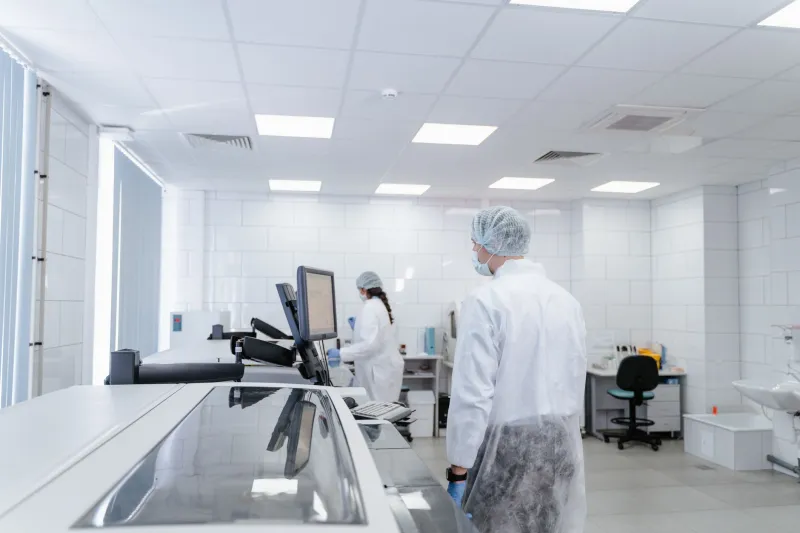
In the relentless calculus of drug discovery, the variables that receive the most executive attention tend to be the most visible: clinical trial design, regulatory strategy, intellectual property positioning, capital allocation. What rarely surfaces in boardroom conversations is the compounding cost of a liquid handler sitting idle for eleven days while a replacement part clears a customs backlog, or a mass spectrometer drifting out of calibration for two weeks before anyone formally flags it.
These are not hypothetical inconveniences. They are routine occurrences across American biotech laboratories, and their cumulative effect on research velocity is far more consequential than the industry has historically acknowledged.
The Operational Blind Spot at the Center of Discovery Science
For decades, laboratory instrument management has occupied a peculiar institutional status within biotech organizations: too technical to attract sustained executive attention, yet too operationally central to be safely ignored. The result is a function that frequently falls into a gap between scientific leadership and facilities management, staffed by capable technicians but rarely connected to the strategic planning frameworks that govern discovery timelines.
The consequences of this misalignment are measurable. A 2022 industry survey conducted by a laboratory operations consultancy found that unplanned instrument downtime accounted for an average of 14 percent of productive research hours lost annually across mid-sized US biotech companies. For organizations operating on compressed development timelines—where a six-week delay in lead compound characterization can determine whether a program reaches IND filing ahead of a competitor—that figure represents a structural liability embedded in the research infrastructure itself.
The problem is not simply that instruments break. It is that the systems governing their maintenance, calibration, and replacement have failed to evolve at the pace of the science they support.
Supply Chain Fragility and the Parts Problem
The COVID-19 pandemic exposed the fragility of global laboratory supply chains with unusual clarity, but the underlying vulnerabilities it revealed predated the crisis by years. Many of the most sophisticated analytical instruments deployed in biotech research—high-performance liquid chromatography systems, flow cytometers, next-generation sequencing platforms—rely on components manufactured by a narrow base of international suppliers. When those supply chains experience disruption, the downstream effect on research continuity can be severe.
Consider the experience of a mid-sized oncology-focused biotech based in the Research Triangle Park region of North Carolina. In early 2021, the company's primary sequencing platform experienced a hardware failure requiring a proprietary component with a lead time that had extended from three days to nearly six weeks. The resulting gap in genomic data generation effectively stalled a key target validation program for over a month, compressing the team's runway before a critical board review.
The company's response was instructive. Rather than treating the incident as an isolated operational failure, its scientific leadership used the disruption as a forcing function to conduct a comprehensive audit of instrument criticality across the entire organization. Every major piece of analytical equipment was assessed not only for its current functional status but for its supply chain exposure, its calibration compliance history, and its strategic importance to active research programs. The audit revealed that the sequencing failure, while the most disruptive, was not an outlier—it was representative of a broader pattern of reactive rather than proactive equipment stewardship.
Calibration Drift and the Data Integrity Consequence
Instrument downtime is the most legible form of equipment-related productivity loss because it is, at minimum, visible. A broken instrument announces itself. Calibration drift, by contrast, operates in silence—and its consequences for research integrity can be considerably more damaging.
Modern biotech research generates enormous volumes of quantitative data whose validity depends entirely on the precision and accuracy of the instruments that produced it. When a plate reader operates outside its validated performance parameters, or when a spectrophotometer's calibration curve has shifted without triggering a formal out-of-specification review, the data it generates may appear superficially normal while quietly introducing systematic error into experimental results.
The scientific cost of this phenomenon is difficult to quantify precisely, but its operational signature is not difficult to recognize. Research teams that invest in rigorous, automated calibration monitoring consistently report fewer instances of unexplained experimental variability, fewer repeat assay runs, and greater confidence in the reproducibility of their data packages—all of which translate directly into accelerated program progression.
A biologics company based in the San Francisco Bay Area implemented a cloud-connected instrument monitoring platform across its discovery organization in 2020, integrating real-time performance telemetry with automated calibration scheduling and out-of-specification alerting. Within eighteen months, the organization reported a 23 percent reduction in repeat assay events attributable to instrument performance issues and a measurable decrease in the time required to prepare data packages for regulatory submissions. The investment in monitoring infrastructure paid for itself, by the company's internal accounting, within the first year.
Rethinking Equipment Lifecycle as a Strategic Function
The biotech companies that have made the most meaningful progress on this challenge share a common strategic insight: laboratory instrument management is not a maintenance function. It is a research velocity function, and it deserves to be governed accordingly.
This reframing has practical implications for how organizations structure their operations. It suggests that instrument lifecycle planning should be integrated into program-level research planning, not treated as a separate facilities budget line. It suggests that equipment criticality assessments should be updated dynamically as research priorities shift, rather than conducted once during laboratory buildout and then filed away. And it suggests that the metrics used to evaluate operational performance should include instrument availability rates and calibration compliance scores alongside the scientific KPIs that already dominate research management dashboards.
Some organizations are going further, embedding dedicated instrument reliability engineers within research teams rather than housing them in a centralized facilities function. This structural choice reflects a deliberate decision to treat equipment performance as a scientific problem rather than a logistical one—and to ensure that the people responsible for instrument health are proximate to the research workflows that depend on it.
The Strategic Case for Unsexy Infrastructure
There is an understandable tendency within biotech culture to reserve strategic attention for the intellectually glamorous dimensions of drug discovery: novel target identification, platform differentiation, clinical proof-of-concept. The operational machinery that supports these endeavors rarely generates the same level of executive enthusiasm.
But the companies that have treated laboratory equipment lifecycle management as a strategic priority—rather than a background operational function—have demonstrated that the returns are real and compounding. Faster instrument recovery times reduce program delays. Better calibration discipline improves data quality and reproducibility. Proactive supply chain management for critical components reduces exposure to the disruptions that have become an increasingly regular feature of the global manufacturing landscape.
In an industry where competitive advantage is often measured in months, and where the cost of a single delayed IND filing can run into the tens of millions of dollars, the unsexy work of keeping instruments running, calibrated, and strategically managed deserves a place at the leadership table. The bottleneck, it turns out, has been hiding in plain sight.