What Leaves When They Leave: The Invisible Knowledge Drain Threatening American Biotech's Competitive Edge
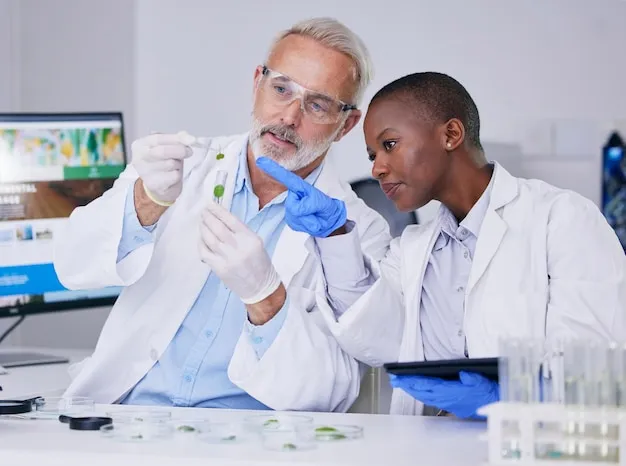
Photo: scientist mentoring colleague in biotech laboratory knowledge transfer, via img.freepik.com
There is a particular kind of loss that does not appear on any balance sheet. It does not trigger a press release or prompt a board-level review. It accumulates quietly, project by project, departure by departure, until the day a research team finds itself repeating an experiment that failed three years ago—an experiment whose failure was never formally documented, never transferred, never preserved.
This is the knowledge drain. And across American biotech, it is happening at a scale that few organizations are willing to acknowledge.
The Problem No One Wants to Quantify
Employee turnover in the biotech sector has reached levels that would alarm most industries. According to workforce analytics compiled over the past several years, the average tenure of a bench scientist at a mid-sized US biotech firm now sits at roughly three years—a figure that has compressed steadily over the past decade as competition for talent between pharmaceutical companies, academic institutions, and well-funded startups has intensified.
But the conversation around turnover tends to focus on recruitment costs, productivity gaps during the transition period, and the expense of onboarding new hires. Rarely does it address what is arguably the most consequential consequence of high churn: the systematic destruction of accumulated scientific knowledge.
Consider what a senior research scientist actually carries. Not just technical skills—those can be trained. What cannot be easily replicated is the layered understanding that comes from years of working within a specific biological system: knowing which assay conditions yield unreliable results under particular humidity levels, understanding why a promising compound series was abandoned eighteen months ago, recognizing the subtle signs that a cell line is drifting before the data confirms it. This is tacit knowledge, and it lives almost exclusively in the minds of the people who developed it.
When those people leave, it leaves with them.
Mentorship Structures That Exist Only on Paper
Many biotech organizations will point to their mentorship programs as evidence that knowledge transfer is already happening. In practice, these programs frequently function as orientation tools for new hires rather than systematic mechanisms for capturing and preserving institutional expertise.
The distinction matters enormously. A mentorship relationship that pairs a junior scientist with a senior colleague for the first ninety days of employment may succeed at cultural integration while failing entirely at knowledge preservation. The senior scientist in that pairing is sharing current knowledge, not archiving historical insight. The experimental dead ends from four years ago, the vendor relationships that proved unreliable, the regulatory feedback that reshaped an entire research direction—none of that surfaces in a structured onboarding conversation.
Furthermore, mentorship programs in biotech tend to be informal, voluntary, and among the first casualties of budget pressure or accelerated timelines. When a program enters a critical phase and resources are stretched thin, mentorship is deprioritized. The knowledge transfer stops. The clock keeps running.
The Cost of Rediscovery
The financial implications of this dynamic are difficult to calculate precisely, which is part of why they remain underappreciated. But the operational reality is well understood by any research director who has managed a team through significant turnover.
Repeated experimental failures—running assays that were already known to be problematic, pursuing compound classes that were previously ruled out, revisiting regulatory strategies that were already rejected—consume time, reagents, and personnel resources that could otherwise be directed toward genuinely novel work. In an industry where the cost of a single failed clinical trial routinely exceeds hundreds of millions of dollars, the upstream waste generated by knowledge loss represents a meaningful drag on efficiency.
Beyond direct costs, there is the subtler damage done to innovation velocity. Breakthroughs in drug discovery frequently depend on the ability to connect disparate observations across time—recognizing that a biological signal observed in one program years ago is relevant to a new target being pursued today. That kind of cross-temporal pattern recognition requires institutional memory. Without it, research teams are perpetually starting from a shorter baseline.
What Forward-Thinking Labs Are Doing Differently
A growing cohort of research organizations is beginning to treat knowledge preservation not as a documentation exercise but as a strategic capability—one that requires dedicated infrastructure, deliberate process design, and genuine organizational commitment.
Some of the most effective approaches share a common philosophical foundation: they recognize that valuable knowledge is generated continuously, not only at the conclusion of a project. Rather than relying on end-of-study reports—which are often written under time pressure and optimized for compliance rather than insight—these organizations are building systems that capture knowledge at the point of generation.
This includes structured laboratory notebooks with mandatory fields for negative results and experimental anomalies, regular knowledge-capture sessions where senior scientists articulate not just what they know but how they came to know it, and the development of internal knowledge repositories designed with searchability and narrative context in mind rather than raw data storage.
Several organizations have introduced the role of what might be called a knowledge steward—a scientist or scientific operations professional whose explicit mandate includes identifying at-risk institutional knowledge, facilitating transfer conversations before departures occur, and maintaining the integrity of the organization's documented scientific history. The position remains rare, but in organizations that have adopted it, research directors report measurable reductions in redundant experimental work.
Perhaps most significantly, a number of forward-thinking labs are beginning to treat exit interviews not as HR formalities but as structured knowledge extraction opportunities. When a senior scientist announces their departure, a systematic conversation begins—one designed to surface undocumented insights, flag unresolved questions, and ensure that the reasoning behind past decisions is captured before it walks out the door.
A Strategic Imperative, Not an Administrative One
The fundamental obstacle to progress on this issue is a framing problem. Most biotech organizations classify knowledge management as an administrative function—something that belongs to operations or information technology rather than scientific leadership. This categorization ensures that it will never receive the investment or executive attention it requires.
The organizations that are outpacing their competitors on this dimension have made a different choice. They have recognized that the accumulated scientific knowledge of their research teams is not a byproduct of their work—it is among their most valuable assets. Protecting it requires the same intentionality that is applied to protecting intellectual property, proprietary data, or competitive positioning.
The scientists who leave American biotech labs each year take with them something that cannot be fully replaced by a new hire, however talented. The question is not whether that loss can be prevented entirely—it cannot. The question is whether organizations are willing to build the systems that minimize it.
For the labs that answer that question seriously, the competitive advantage is already becoming visible. For those that do not, the cost will continue to compound in ways that are invisible until they are not.